Inspire, Drawn & Transform
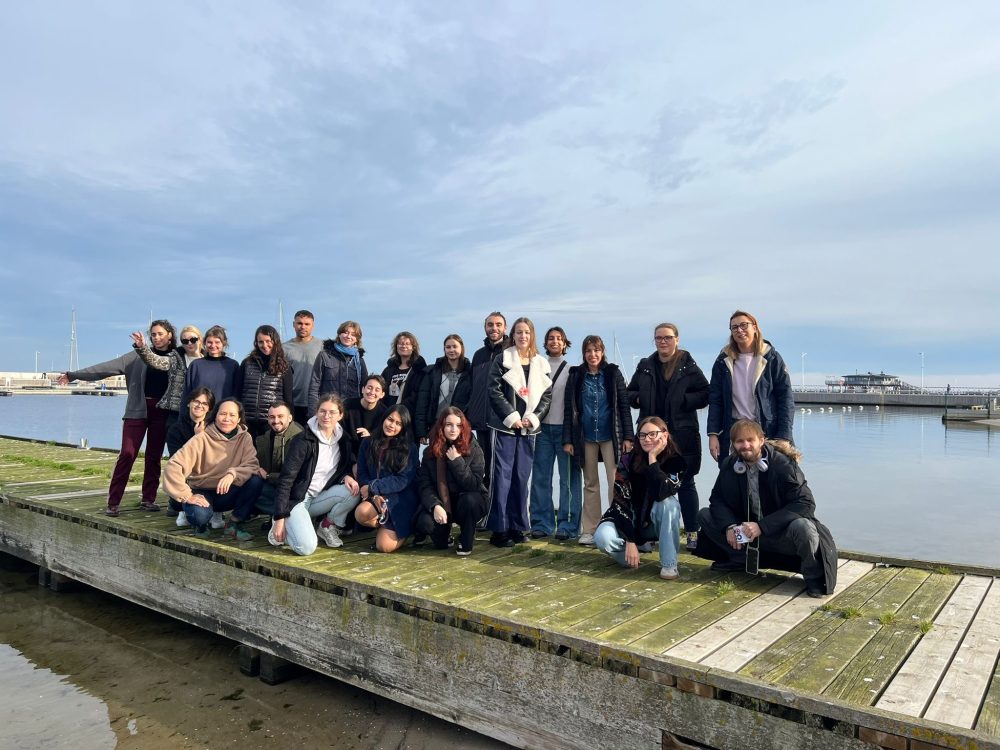
Drawn Together: Visual Tools for Youth Work was a training course on visual facilitation and working with young people at risk of exclusion. It gathered youth workers fromPoland, Greece, Netherlands, Spain, Italy, Slovakia, Slovenia, Czech Republic, Hungary
The aim of the training was to explore how visual tools can be used for creating better, more engaging educational content, with a special focus on how to make the teaching materials we use more accessible for youth at risk of exclusion. During the week we explored both theory and practice of the topic.
Day 1
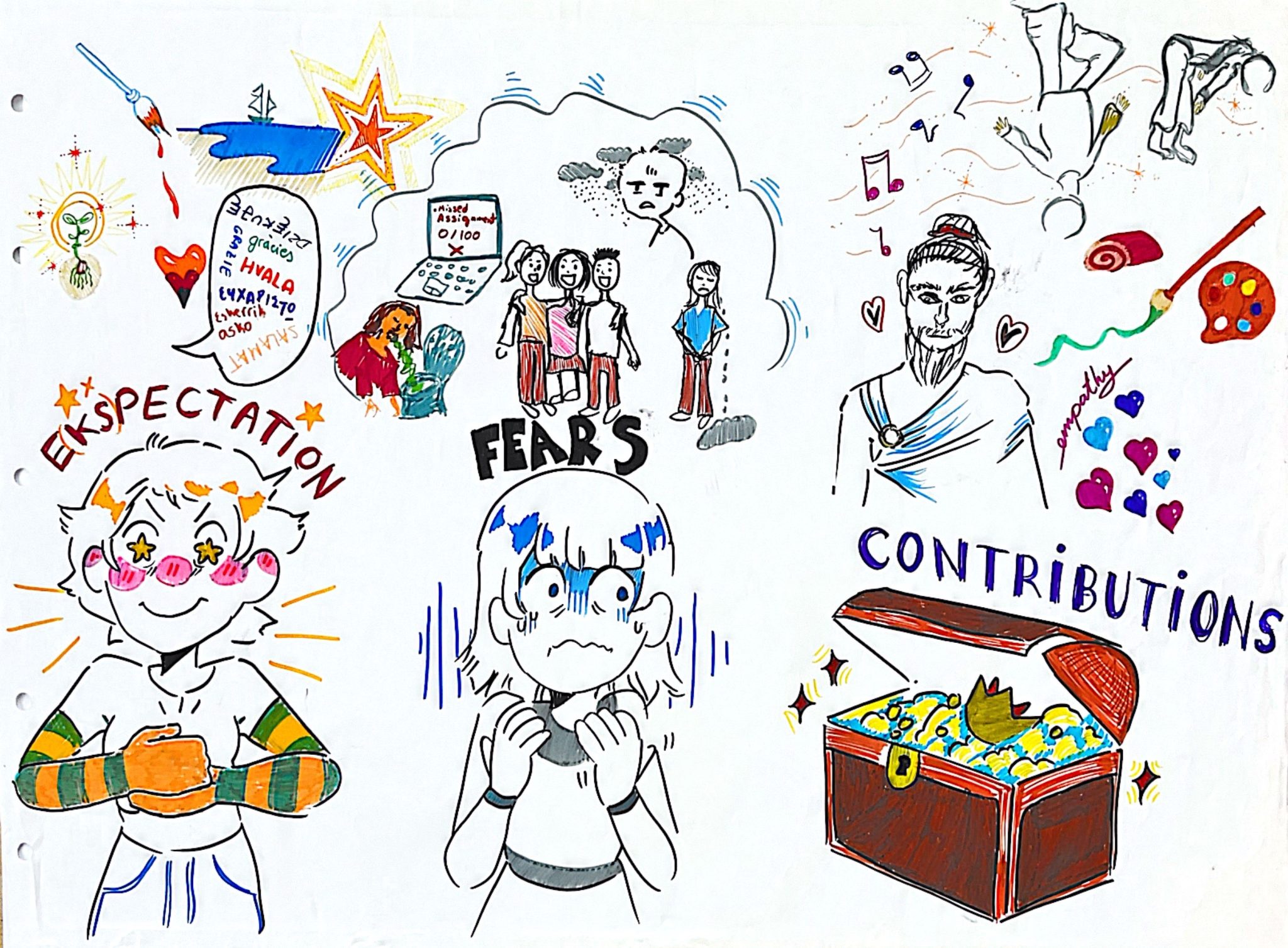
During the first day we focused on forming relations between participants and establishing a safe, comfortable space for further learning planned for the upcoming days. To achieve that, participants engaged in different getting to know each other activities, including name games, speed dating, and human bingo. In the end of the day we talked about expectations, contributions, and fears, as well as the concept of self-assessment in learning and YouthPass key competences.
Day 2
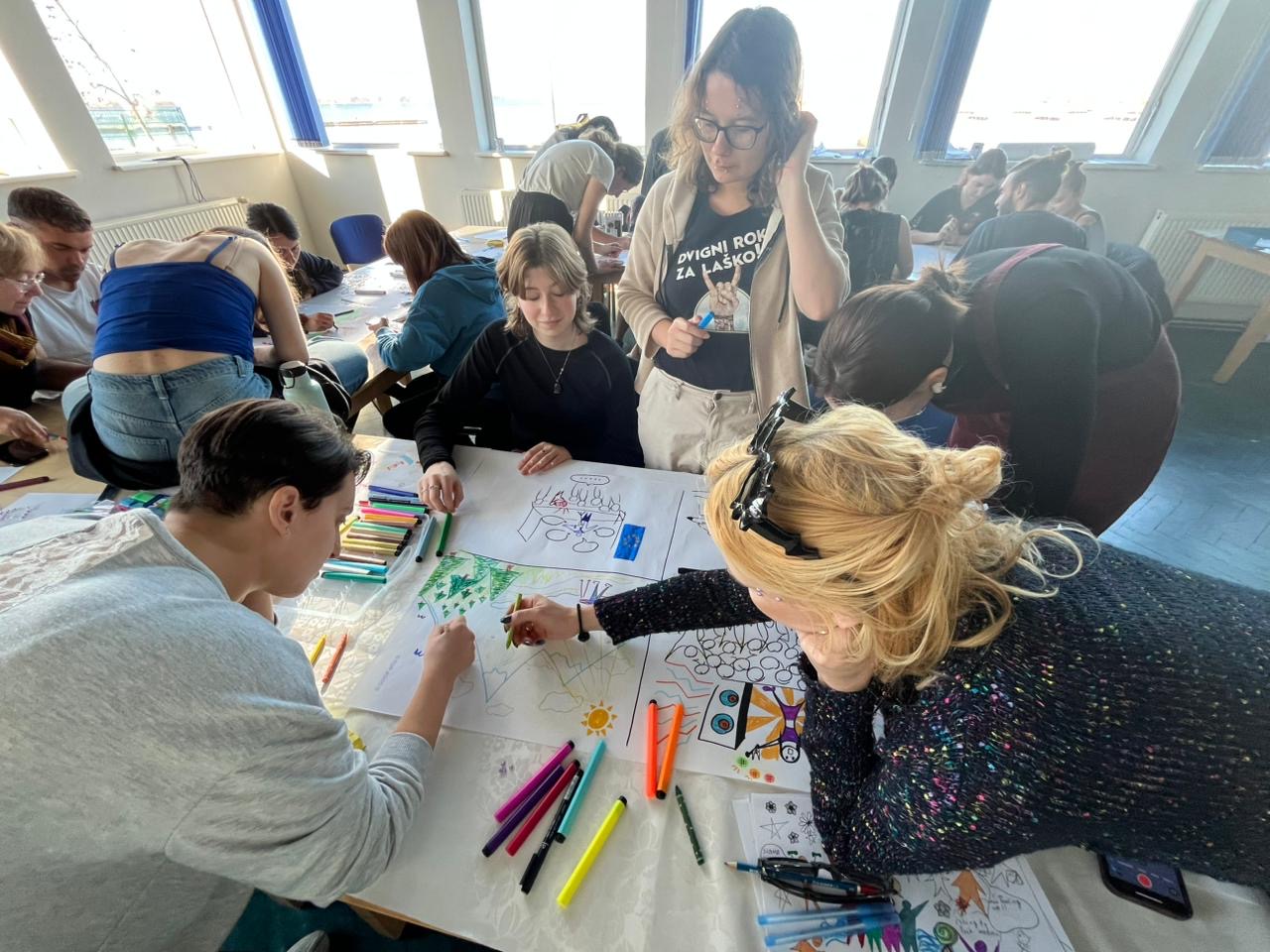
The content part of the training started with introduction to visual facilitation with theoretical input on the most important aspects of the concept. After that participants got a chance to practice their drawing skills and explored topics like 7 elements of visual facilitation, basic shapes, and basic lettering.
Day 3
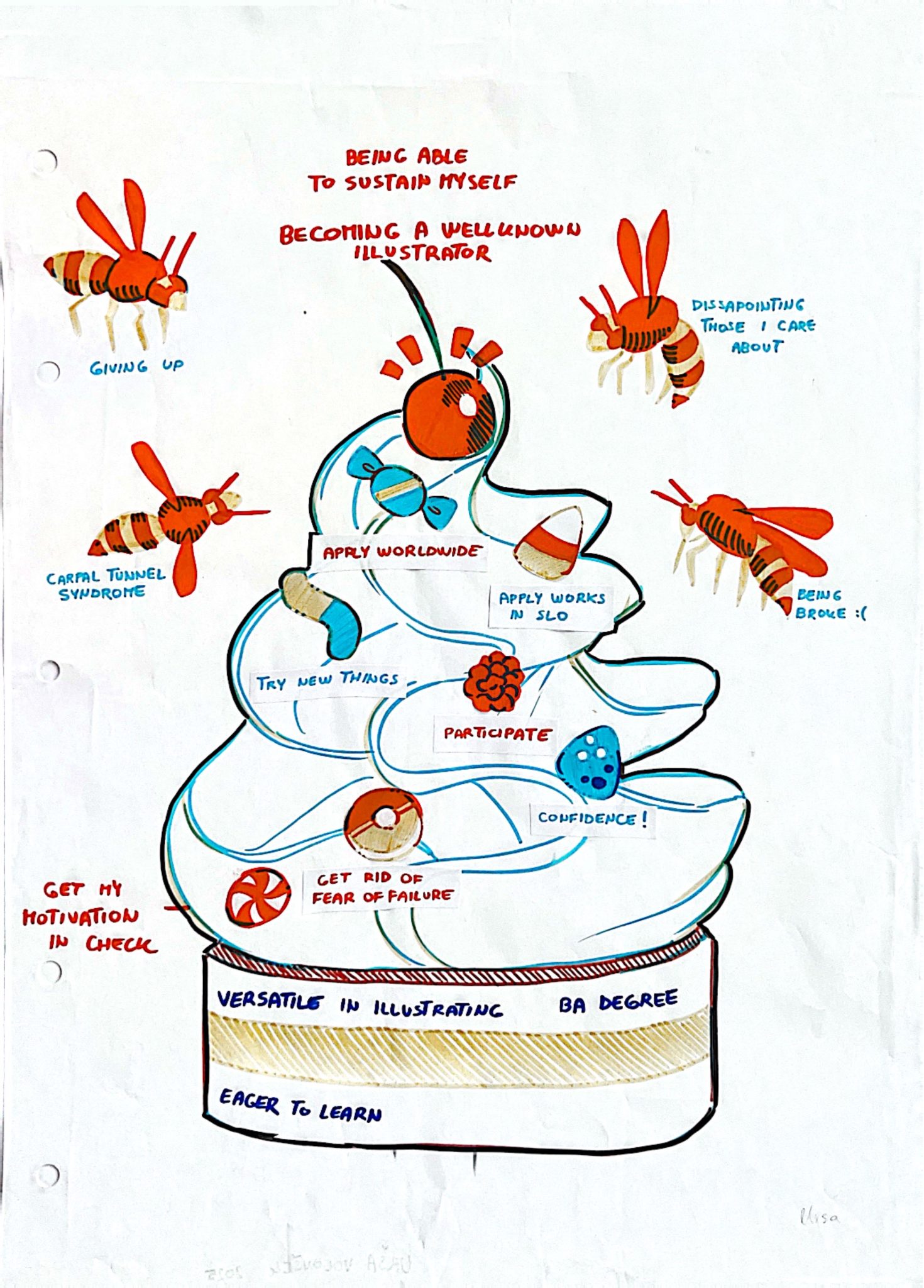
Day 3 was devoted to exploring how to work more effectively with young people at risk of exclusion. Participants got to know some basic theories of learning and learning types (the Kolb cycle, Mumford and Honey learning types theories). They also discussed the topic of inclusion/exclusion and took part in two simulation games (let me in, labels) to make them more sensitive towards the needs of young people at risk. At the end of the day, participants made a visual reflection, drawing what they have learned.
Day 4
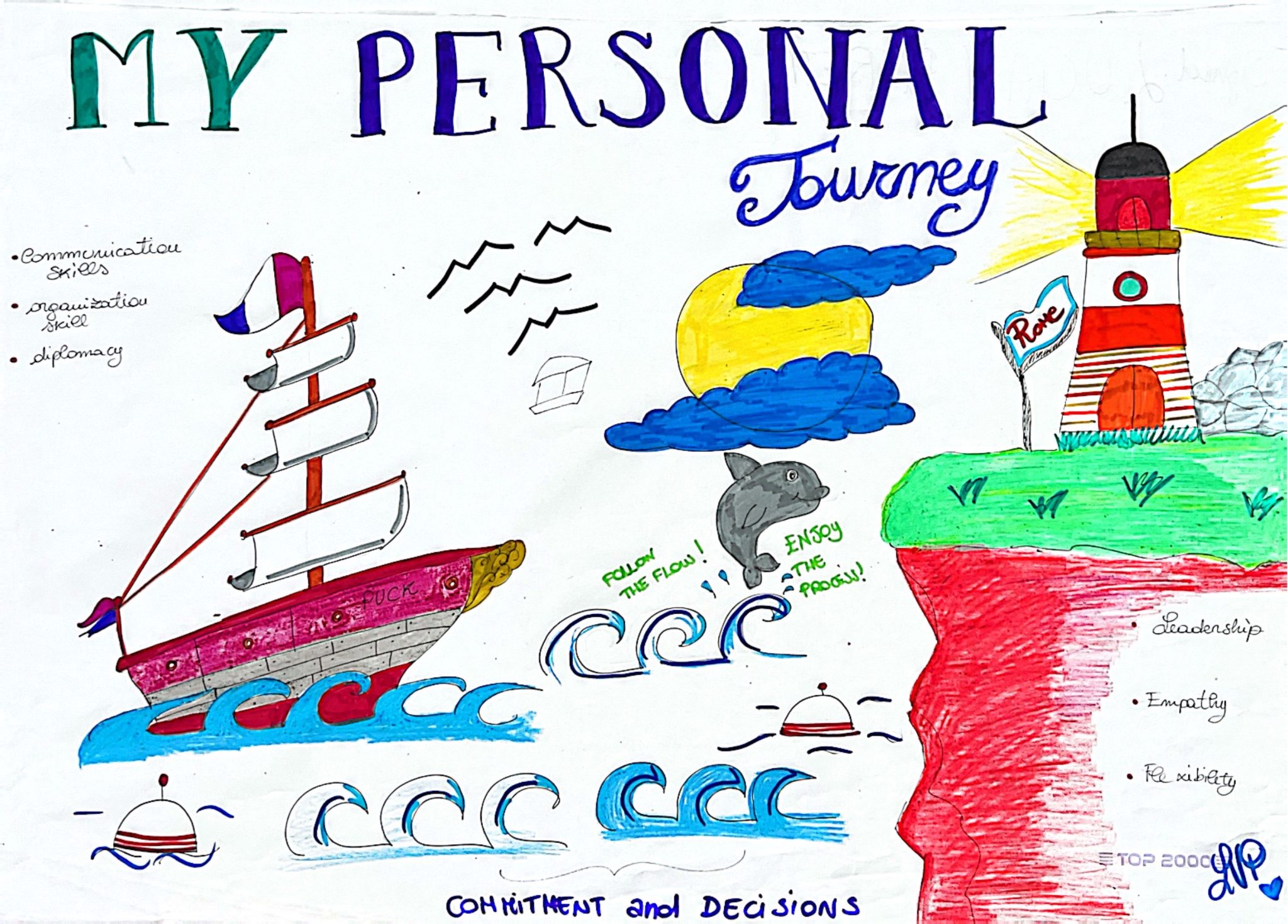
Day 4 was devoted to visual reflection on what competences (skills, knowledge, attitudes) participants already have as facilitators/teachers. They had time to think of their learning goals and important milestones they need to reach to become better at working with youth. Then their task was to draw, present, and discuss their personal visual journeys.
Day 5
On day 5 participants continued to draw and practice their skills related to visual facilitation. They focused on using different techniques (mapping the ideas, visualising emotions) to learn how to produce engaging and visually appealing teaching materials to be used in their work with young people at risk of exclusion.
Day 6
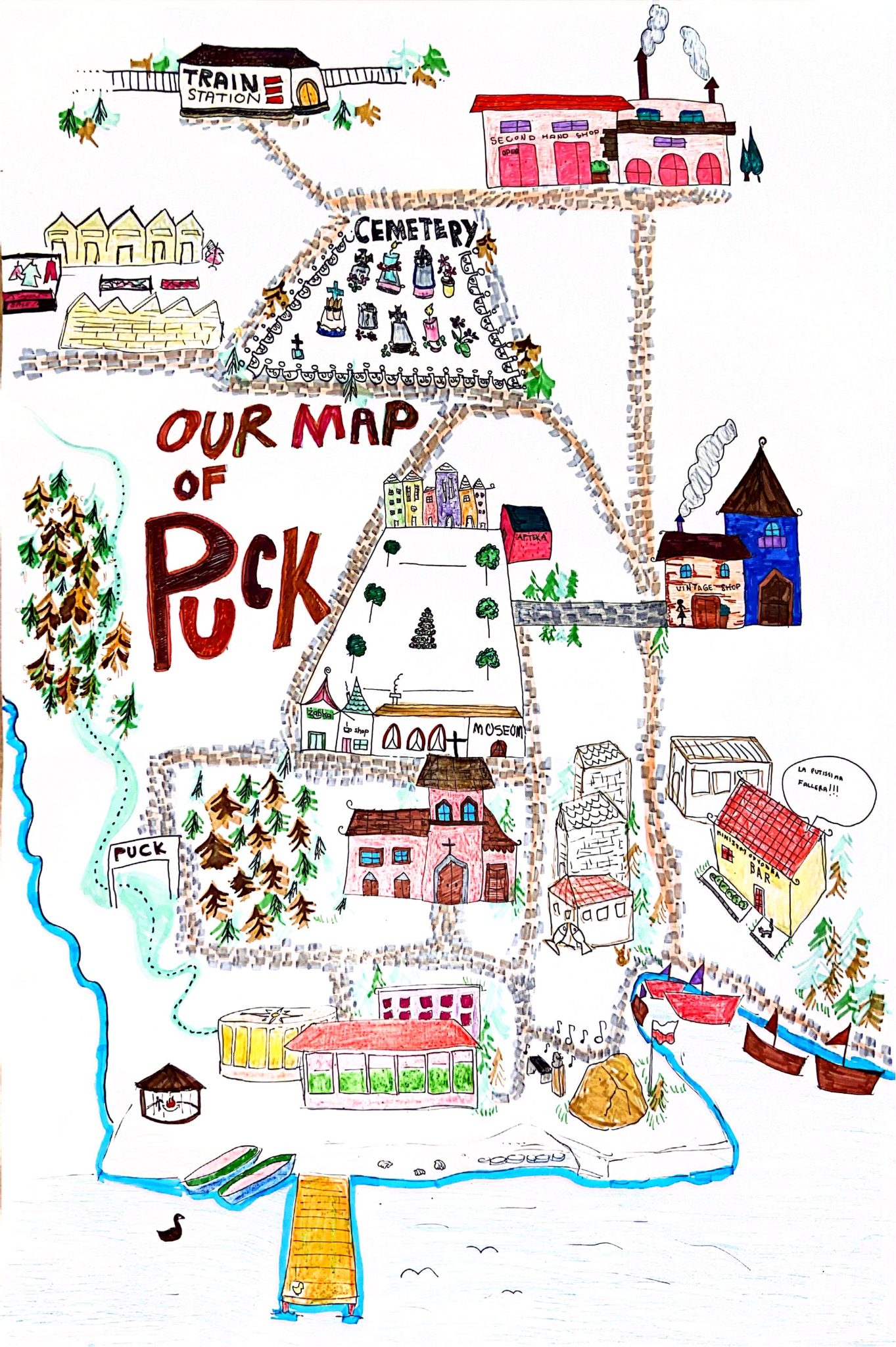
Day 6 was focused on learning and practicing how visual tools can be used for community mapping and need assessment. To explore the topic, participants were divided into groups and their task was to create maps of Puck – a small town where the training was taking place – focusing on visually presenting important landmarks and things they found surprising/interesting/inspiring.
Day 7
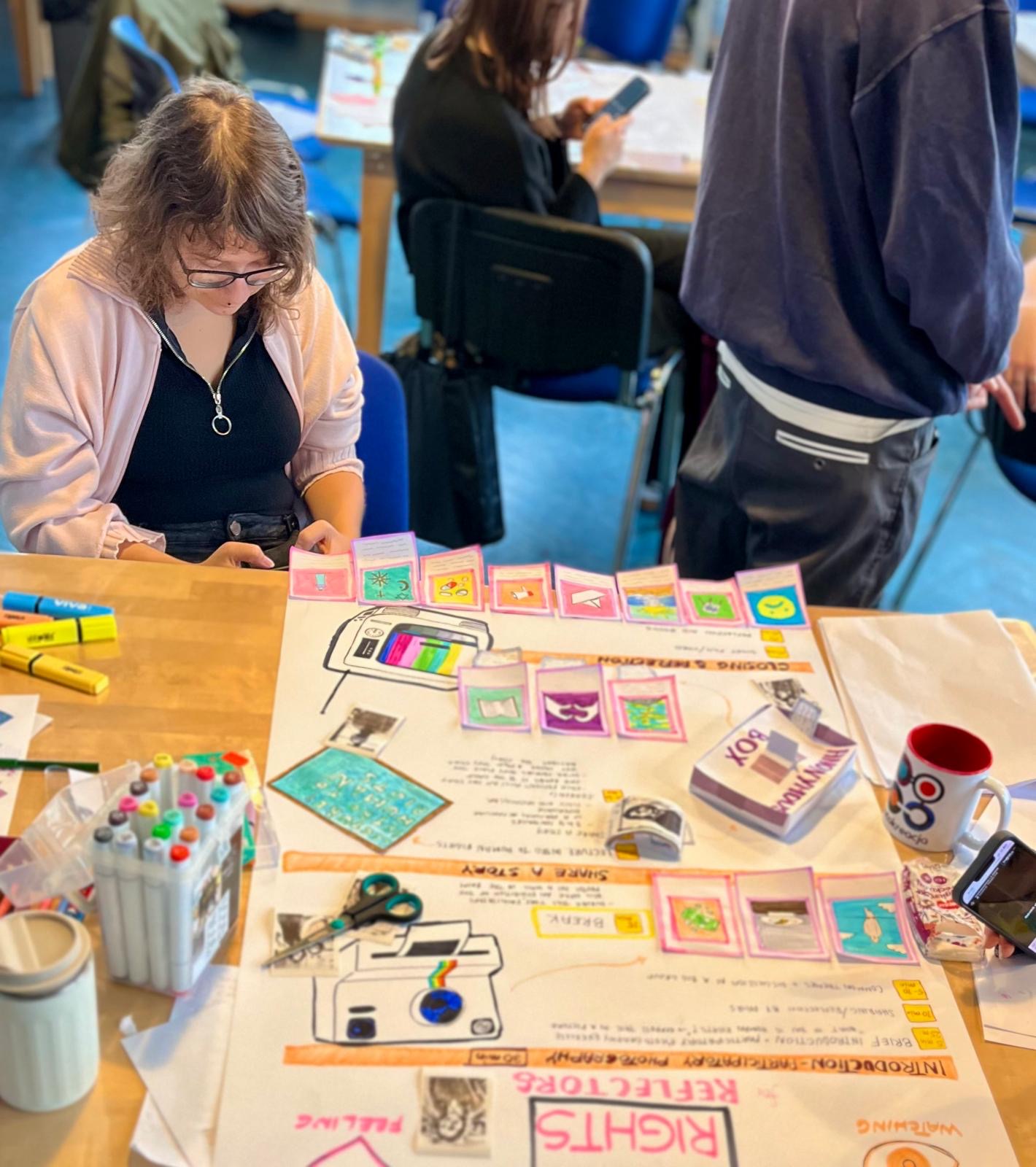
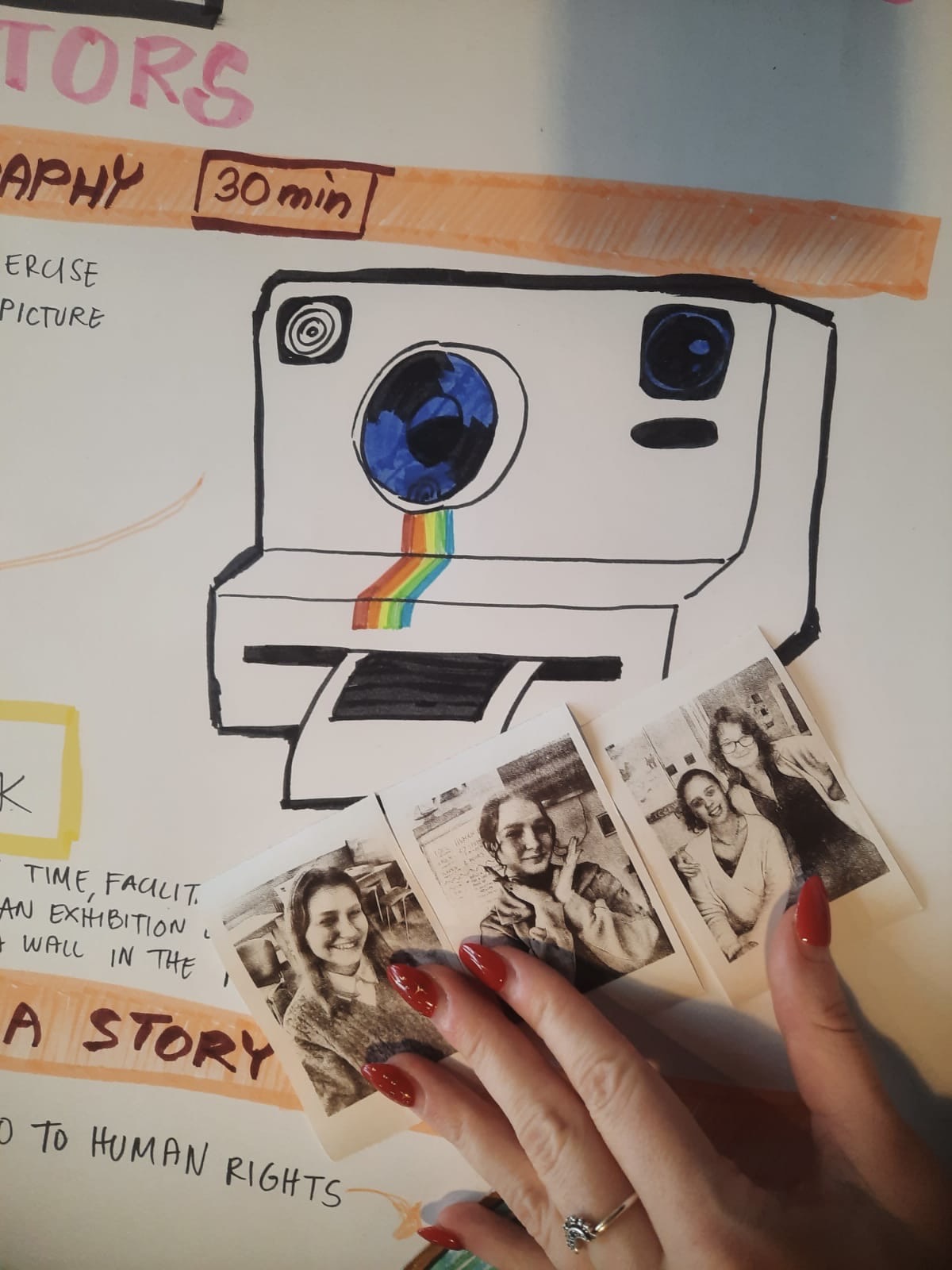
On the last day of the training course participants used all their knowledge and skills to design educational content adjusted to the needs of people at risk. To do this, they went back to the concept of different learning types (reflector, activist, theorist, pragmatist) and thought about how a topic of human rights can be visually presented. During the last session participants underwent a reflection on what they have learned and what YouthPass key competences they have gained.
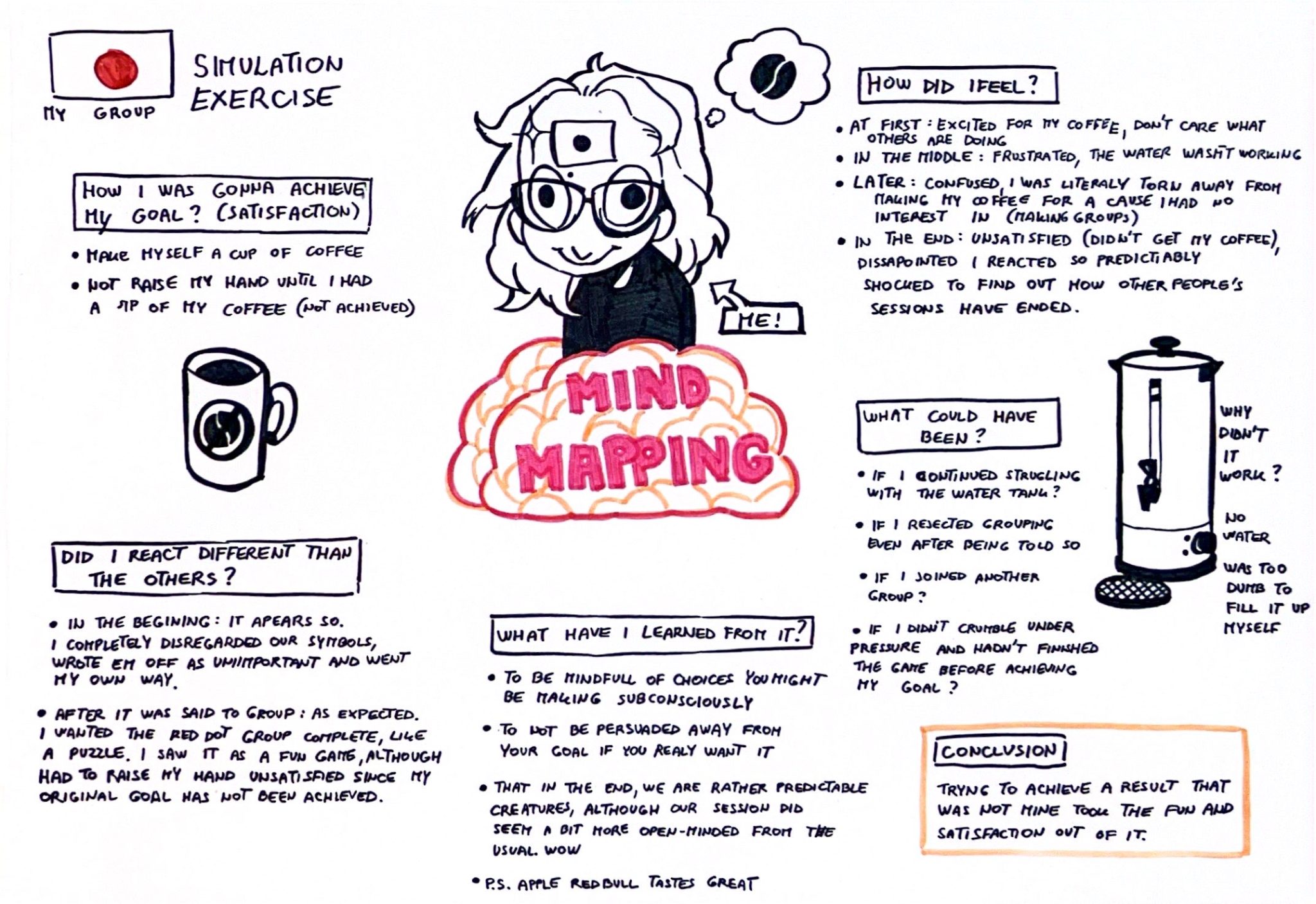
As an illustrator I am now more informed on how facilitation of groups work, and have a better idea of what. I would do in an event where I’d be put to lead a group activity. I have also learned a lot about how to work with vulnerable groups, and will use the knowledge learned if I lead any art related activities.
~ Ursa
Dina
I want to arrange a workshop that brings together teenagers with and without physical disabilities to learn and create together through non-formal education.
Annisa
Throughout this project I developed a more systematic understanding of how to design youth-work activities that are both participatory and evidence-informed
Ramon
These methods will make lessons more inclusive for those who struggle with reading or confidence. I will use visual tools to explain new words, help students share their feelings, and work together in groups.
Our toolkit
Our Erasmus+ Accreditation
We are proud to announce that Autokreacja has been awarded Erasmus+ accreditation in the field of Youth for the programme period 2021–2027.
Erasmus+ accreditation is a
-
meets the high standards of the Erasmus+ programme,
-
has a clear long-term strategy for international cooperation,
-
is committed to inclusion, sustainability, and active citizenship,
-
ensures quality, transparency, and accessibility in all mobility activities.

Inclusion and diversity
The activity will be based on an inclusive approach, ensuring access for diverse participants

Participation in democratic life
This activity will promote youth participation in democratic life, support social and civic engagement, and strive to ensure that all young people have the means necessary to take part in social life.

EU youth goals
This activity will address one or more of the EU Youth Goals. Where applicable, detailed information is provided in the documentation published by the National Agency.”